Ever found yourself rummaging through the back of your pantry or kitchen cupboard, knocking over bottles and jars just to reach that one spice you need? A lazy Susan solves this everyday frustration with one simple spin. This rotating organiser has been quietly revolutionising kitchens, bathrooms, and laundry spaces for decades, yet many people still don’t know its quirky name or fascinating history.
What is a lazy Susan
A lazy Susan is a rotating tray or turntable typically placed on a table, countertop, or inside a cupboard. It allows you to access items from all sides with just a gentle spin, eliminating the need to reach, stretch, or move other objects out of the way.
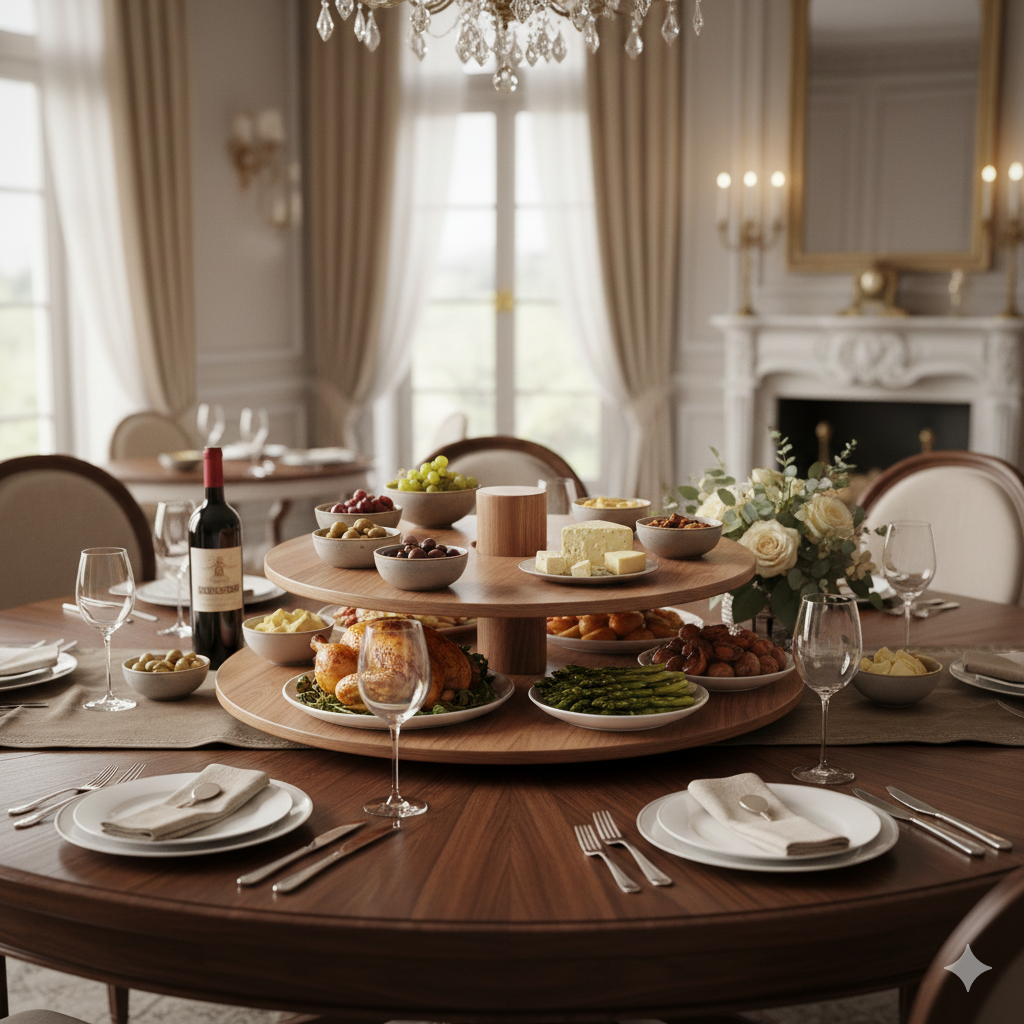
These practical organisers come in various sizes and materials:
- Plastic lazy Susans: Lightweight and affordable, perfect for pantries and fridges
- Wooden lazy Susans: Stylish options for dining tables and countertop displays
- Glass lazy Susans: Elegant choices for entertaining and formal settings
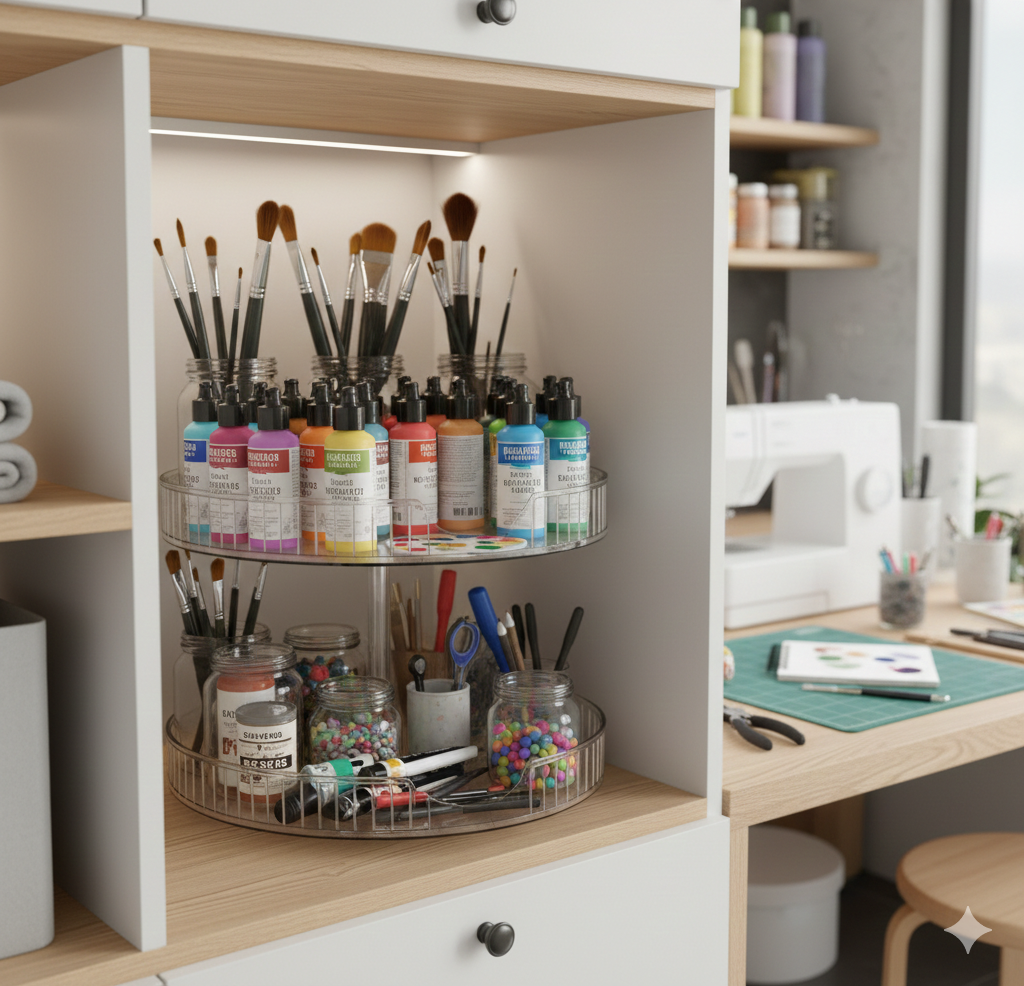
- Two-tier lazy Susans: Maximise vertical space in deep cupboards
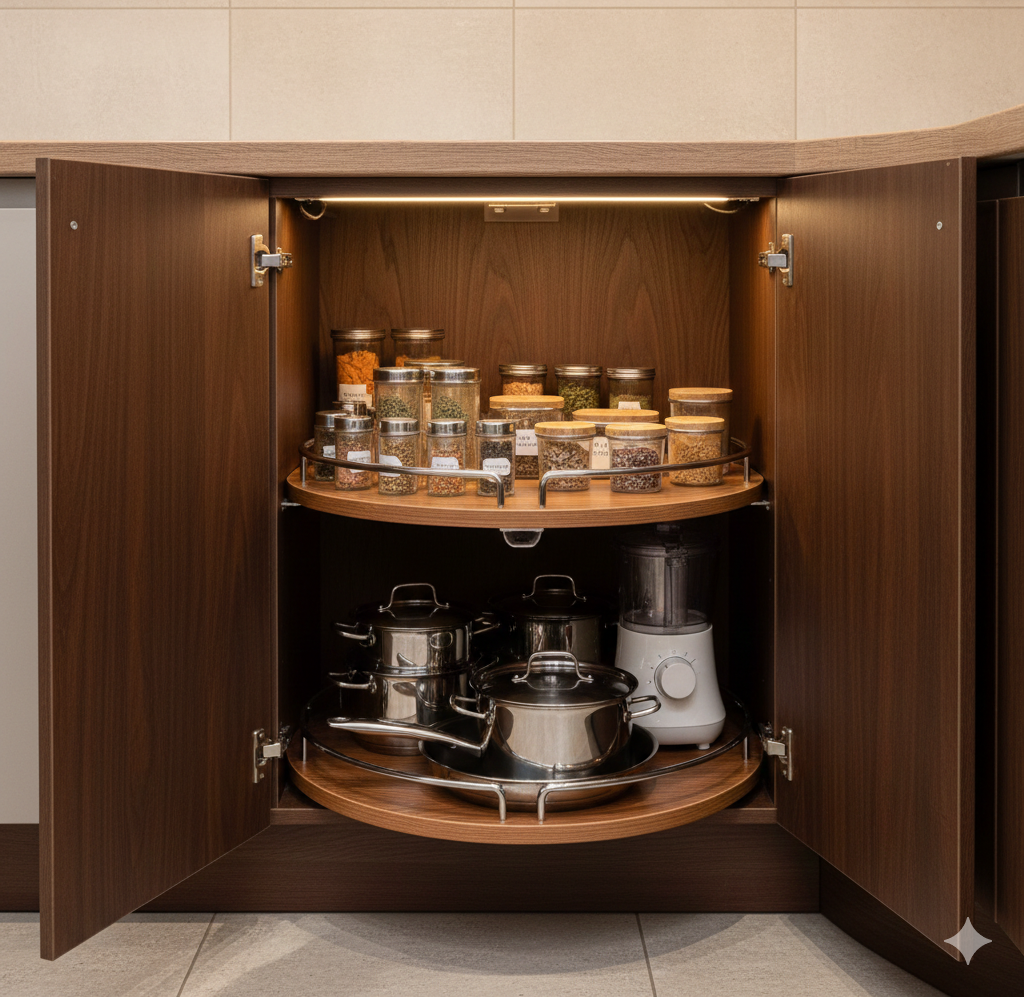
- Corner cabinet lazy Susans: Specifically designed to utilise awkward corner spaces
Stainless steel lazy Susans have also gained popularity, particularly for outdoor kitchen dining areas and barbecue stations. These durable options resist rust and corrosion, making them ideal for humid bathrooms or outdoor entertaining spaces. While typically priced higher than plastic versions, stainless steel lazy Susans offer a sleek, professional appearance that suits modern minimalist kitchens and can withstand heavy daily use without showing wear.
Why is it called a lazy Susan
The origin of the name “lazy Susan” remains a bit of a mystery, with several competing theories. The most popular explanation dates back to early 20th century America, where the device became commercially popular in the 1910s and 1920s.
One theory suggests the name came from the idea that it made serving easier, so easy that even a “lazy” server (presumably named Susan) could use it without much effort. In the early 1900s, it was common to give household items female names, particularly servants’ names.
Another theory points to Thomas Jefferson, who allegedly invented a similar rotating serving tray for his dining table at Monticello, though he never called it a lazy Susan. The actual term first appeared in a Vanity Fair advertisement in 1917, but no one documented who coined it or why Susan was chosen.
Despite the uncertain origins, the name stuck. In other parts of the world, these rotating trays go by different names: “turntable,” “rotating tray,” or even “dumbwaiter” in some regions, but in Australia and most English-speaking countries, “lazy Susan” remains the go-to term.
How to use a lazy Susan in your home
Modern homes have discovered countless creative ways to use lazy Susans beyond the traditional dining table. Here are the most effective applications:
Kitchen and Pantry Organisation
- Corner cupboards – Turn wasted corner space into accessible storage for plates, bowls, or dry goods
- Spice storage – Keep all your herbs and spices visible and within reach with a single spin
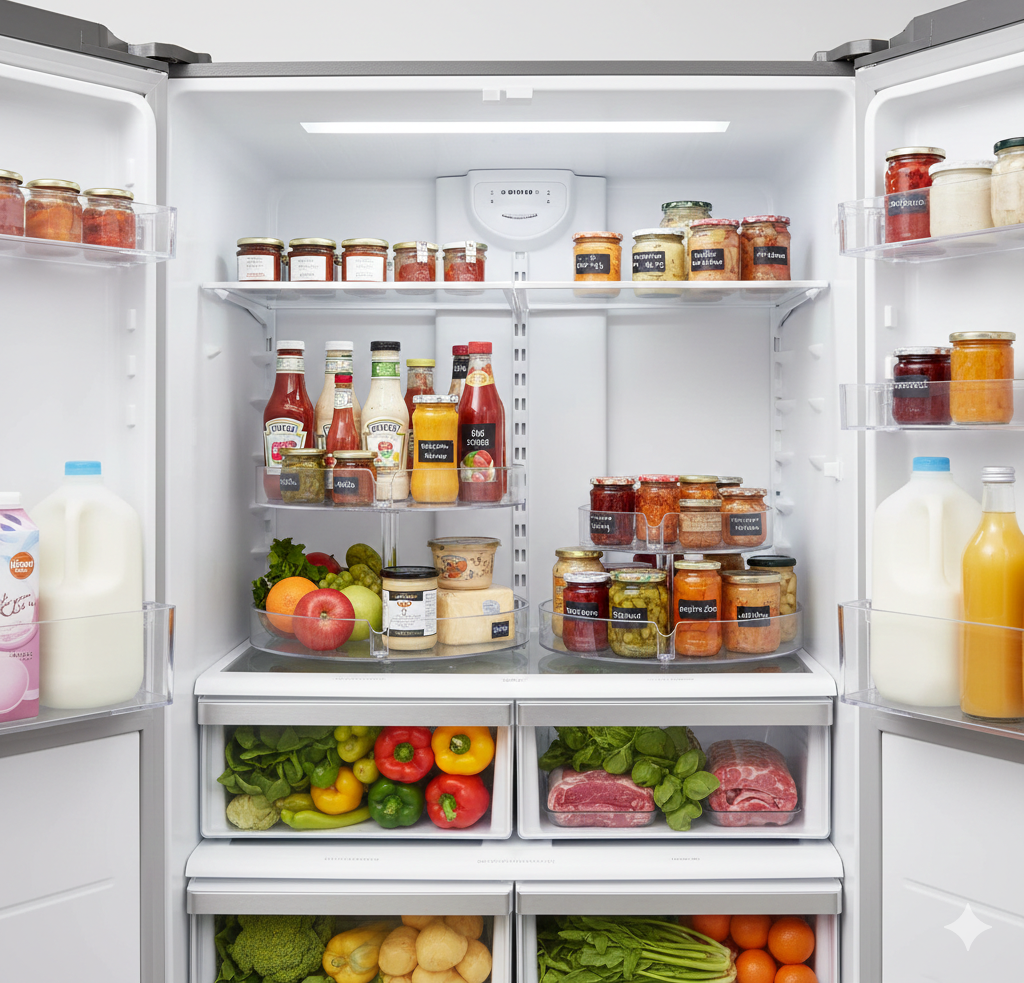
- Condiment station – Group sauces, oils, and vinegars on your benchtop or in the fridge door
- Baking supplies – Organise flour, sugar, sprinkles, and food colouring for easy access
- Canned goods – Stack tinned tomatoes, beans, and soups on a two-tier lazy Susan
Bathroom and Laundry Solutions
- Under-sink storage – Corral cleaning products and make them easy to grab without crawling
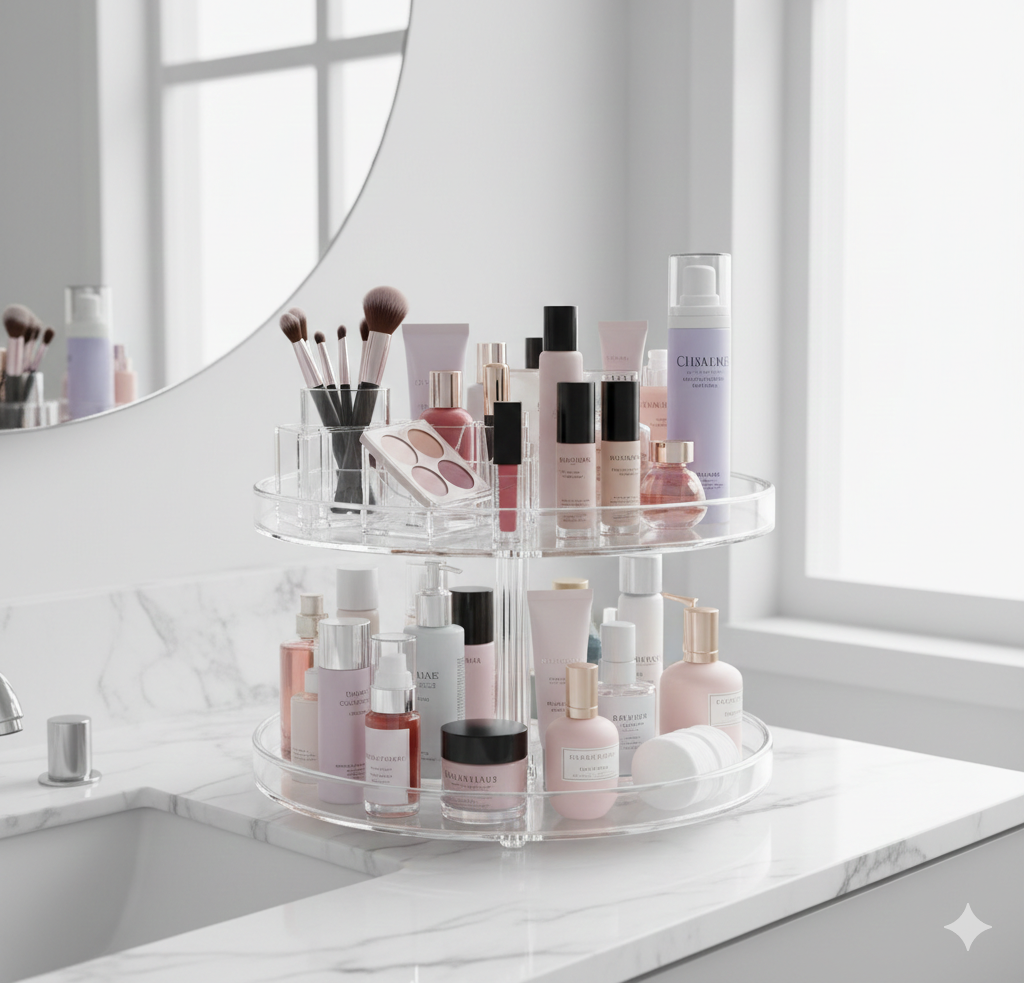
- Cosmetics organiser – Spin through skincare products, makeup, and toiletries on your vanity
- Medicine cabinet – Keep vitamins, first aid supplies, and medications orderly and accessible
- Laundry essentials – Group detergents, stain removers, and fabric softeners in one rotating spot
Beyond the Kitchen
- Craft supplies: Organise paints, brushes, and small tools for creative projects
- Office desk: Keep pens, sticky notes, and desk accessories within spinning distance
- Outdoor entertaining: Create a condiment station for barbecues and picnics
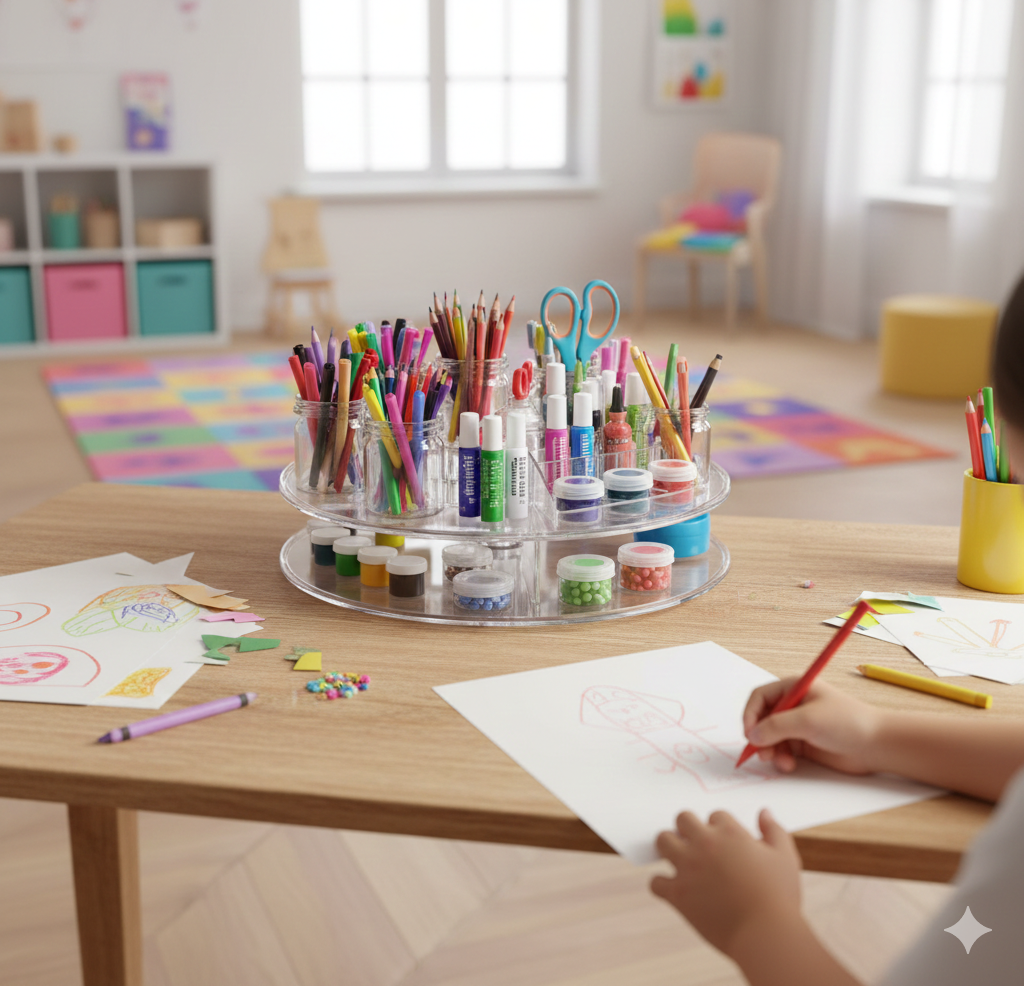
- Kids’ art supplies: Let children easily access crayons, markers, and craft materials. This one is specially valuable to me, there is less chaos and somehow kids find it fun to put the things in their place.
Benefits of using a lazy Susan
The popularity of lazy Susans in Australian homes isn’t just about nostalgia, these simple organisers deliver genuine practical benefits:
Maximised space efficiency: Lazy Susans help you utilise every centimetre of awkward spaces like corner cupboards, deep pantries, and under-sink areas that would otherwise go to waste.
Improved accessibility: No more pulling out multiple items to reach what’s at the back. A quick spin brings everything to the front, saving time and reducing frustration.
Better visibility: When everything rotates into view, you’ll actually use what you own instead of forgetting about items buried at the back. This reduces food waste and duplicate purchases.
Less clutter: By grouping similar items on a lazy Susan, you create defined zones in your storage spaces, making it easier to maintain organisation.
Reduced strain: For people with mobility issues or anyone who finds bending and reaching difficult, lazy Susans bring items to you rather than forcing awkward movements.
Susans as essential kitchen storage solutions
When planning your kitchen storage strategy, lazy Susans deserve consideration alongside other organisational tools. As Australian homes trend toward smaller kitchens and open-plan living, maximising every centimetre of kitchen storage has become essential.
Lazy Susans excel as kitchen storage solutions because they transform dead space into functional areas. That awkward corner cabinet in your kitchen? A lazy Susan converts it from a black hole where items disappear into premium kitchen storage real estate. Under-sink areas, deep pantry shelves, and narrow cupboards all benefit from the rotating accessibility that lazy Susans provide.
Many Australian homeowners combine lazy Susans with other kitchen storage organisers like drawer dividers, shelf risers, and stackable bins to create a comprehensive storage system. The rotating function of a lazy Susan complements fixed storage by ensuring you can actually see and reach everything you’ve organised, preventing the common problem of items getting lost at the back of cupboards.
For kitchen dining areas, lazy Susans serve double duty as both storage and serving pieces. Keep your everyday condiments, napkins, and table essentials organised on a lazy Susan positioned on your kitchen dining table or benchtop, it’s there when you need it and keeps everything tidy between meals. This approach is particularly practical for families who eat most meals in the kitchen dining space rather than a formal dining room.
How to choose the right lazy Susan
Not all lazy Susans are created equal. Here’s what to consider when selecting one for your Australian home:
Measure your space: Before purchasing, measure the cupboard, shelf, or surface where you plan to use it. Lazy Susans range from 20cm to 45cm in diameter, and you’ll want about 2-3cm clearance on all sides for smooth rotation.
Consider the weight capacity: Cheaper plastic models work fine for lightweight items like spices or beauty products, but if you’re storing heavy jars, tinned goods, or appliances, invest in a lazy Susan with a sturdy bearing mechanism and higher weight rating.
Choose the right material: Plastic is budget-friendly and easy to clean, timber adds warmth and style, while acrylic or glass options suit modern aesthetics. Stainless steel lazy Susans offer superior durability and a professional finish, they’re perfect for outdoor kitchen dining setups, barbecue areas, or any space where you want a sleek, contemporary look. The regular price for stainless steel models runs higher than plastic, typically $40-70, but they resist rust, handle heavy items better, and maintain their appearance for years. For humid areas like bathrooms, stainless steel or high-quality plastic work best, as they won’t rust or deteriorate like some materials might.
Think about edges: Lazy Susans with raised edges or rails prevent items from sliding off during rotation, essential for storing bottles or small containers.
Single vs two-tier: Two-tier lazy Susans double your storage capacity vertically, making them ideal for deep cupboards or when you need to organise many small items.
Lazy Susan alternatives and similar products
While lazy Susans excel in many situations, sometimes other organisers work better for specific needs:
Pull-out drawers: For deep cupboards where you need to see everything at once without spinning, pull-out drawer systems might suit better.
Tiered shelf organisers: When you want items at different heights but don’t need rotation, stepped shelf risers create visibility without the spinning mechanism.
Turntable caddies with compartments: These combine the rotating function of a lazy Susan with built-in dividers, perfect for organising makeup or craft supplies.
Corner cabinet carousels: For kitchen corner cupboards, full-height carousel systems (sometimes called “magic corners”) maximise vertical space even more effectively than traditional lazy Susans.
Lazy Susan maintenance and care tips
To keep your lazy Susan spinning smoothly for years:
Regular cleaning: Wipe down the surface weekly with a damp cloth. For plastic or acrylic, use warm soapy water. Timber lazy Susans may benefit from occasional treatment with food-safe mineral oil.
Check the bearing: If your lazy Susan starts sticking or making noise, the bearing mechanism may need cleaning. Remove any debris or dried spills from the centre, and apply a small amount of food-safe lubricant if needed.
Don’t overload: Respect the weight capacity. Overloading strains the bearing and can cause warping or cracking in the platform.
Distribute weight evenly: Place heavier items near the centre rather than all on one side to maintain smooth rotation and prevent tilting.
Protect the surface: For timber lazy Susans used for food service, consider using placemats or coasters under damp bottles to prevent water rings and staining.
Whether you call it a lazy Susan, turntable, or rotating tray, this simple organisational tool has earned its place in Australian homes. From transforming chaotic corner cupboards into functional storage to creating elegant table settings for gatherings, lazy Susans prove that sometimes the most effective solutions are the simplest ones.
The quirky name might raise eyebrows, but the practical benefits speak for themselves. If you’re tired of playing cupboard Tetris every time you need a spice jar or cleaning product, a lazy Susan might be exactly what your home needs. At under $20 for most models, it’s one of the most affordable ways to reduce daily frustrations and bring genuine organisation to your living spaces.
Give one a spin, you might wonder how you ever managed without it.