Let’s be honest, most of us didn’t wake up one morning and decide to live surrounded by stuff we don’t need. It happens gradually. A few purchases here, some sentimental items there, and before you know it, your home feels more like a storage unit than a sanctuary.
If you’re reading this, you’re probably ready for a change. Maybe you’ve tripped over the same pile of shoes for the hundredth time, or you can’t find your car keys in the morning without a full-scale search operation. You’re not alone, and more importantly, you don’t need to be a professional organiser to reclaim your space.
This guide will walk you through practical, proven decluttering strategies that actually work.
Why Is My House Always So Cluttered?
We live in one of the world’s most consumer-driven societies. With convenient online shopping, frequent sales events, and same-day delivery options. But, sometimes the problem isn’t having too much stuff, it’s not having the right systems to organise what you own. Without proper storage containers for your pantry, bathroom organisers for your toiletries, or drawer dividers for your kitchen utensils, even a reasonable amount of belongings can look chaotic.
How Do I Start Decluttering When I’m Overwhelmed?
The biggest mistake people make when decluttering is trying to tackle everything at once. You look at your entire home, feel paralysed by the enormity of the task, and end up doing nothing. Here’s how to break that cycle.
The 15-Minute Daily Method
Set a timer for just 15 minutes and focus on one small area. This could be:
- One kitchen drawer
- The top of your bedside table
- A single shelf in your pantry
- Your car’s glove box
- One bathroom cabinet
The beauty of this approach is twofold: you make genuine progress without exhaustion, and you build momentum. After a week of 15-minute sessions, you’ll have decluttered seven distinct areas. That’s 105 minutes of focused work that transforms multiple spaces.
The Four-Box Technique
Grab four boxes or bags and label them: Keep, Donate, Sell, and Rubbish. As you work through any area, every item must go into one of these categories. This forces decision-making and prevents the common trap of moving clutter from one spot to another.
Start With High-Impact Areas
Some spaces deliver more visual and functional improvement for your effort. These “quick wins” motivate you to continue:
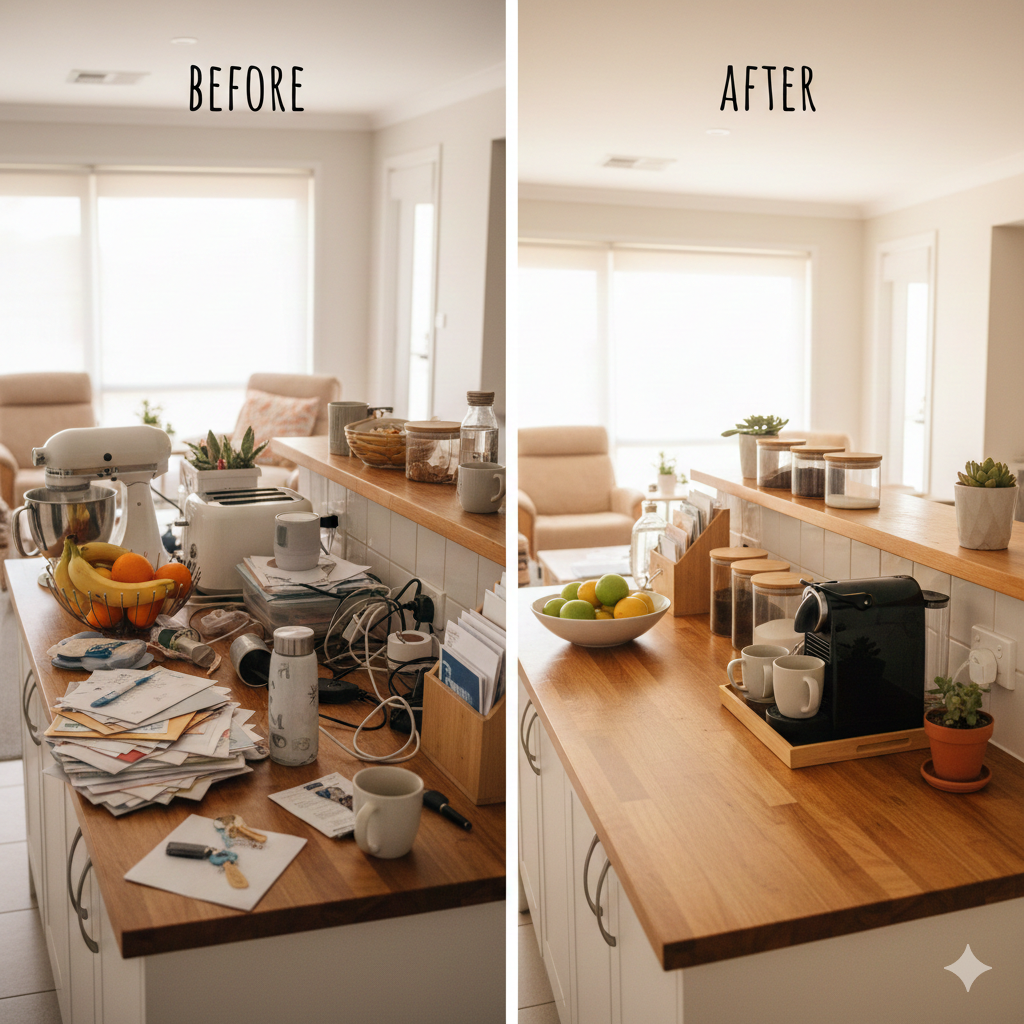
- Kitchen benchtops
- Entryway or hallway
- Coffee table or dining table
- Bathroom vanity
What Should I Throw Away First?
Knowing what to declutter first removes the guesswork and decision fatigue. Start with items that require minimal emotional deliberation.
Expired Items (No-Brainer Category)
Walk through your home and dispose of anything expired:
- Medications and vitamins (return to pharmacy for safe disposal)
- Cosmetics and skincare products (most have a 6-24 month shelf life after opening)
- Pantry items past their best-before date
- Old sunscreen (especially critical in Australia—expired sunscreen loses effectiveness)
Duplicates and Multiples
Count how many you have of common items. You probably don’t need:
- 12 coffee mugs for a two-person household
- 5 wooden spoons
- 8 bath towels per person
- Multiple sets of bed sheets for the same bed (2-3 sets maximum)
Broken Items You’ll Never Fix
Be ruthlessly honest: if you haven’t repaired it in six months, you won’t repair it ever. This includes:
- Kitchen appliances that don’t work
- Clothing with stains or damage
- Electronics with cracked screens
- Furniture that’s unstable
Clothes That Don’t Fit or Suit Your Lifestyle
Wardrobes often contain clothes for versions of ourselves that no longer exist. Remove:
- Items that haven’t fit for over a year
- Formal wear you haven’t worn in 2+ years
- “Aspirational” purchases that never suited you
- Worn-out basics (stained t-shirts, holey socks, stretched underwear)
How Can I Organize My Kitchen to Save Space?
The kitchen is the heart of most Australian homes, and also the biggest clutter magnet. Here’s how to transform it into an efficient, organized space.
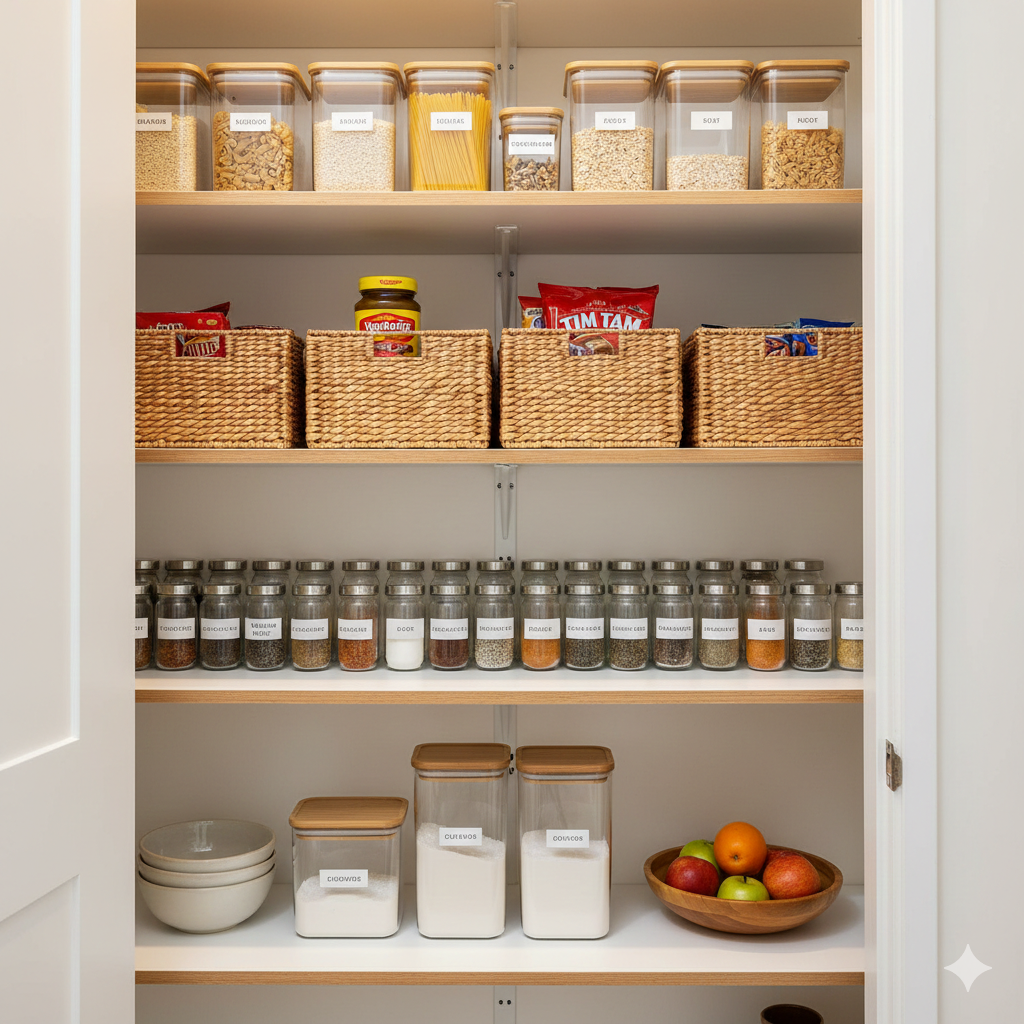
Declutter Your Pantry First
Before buying any storage containers, audit what you actually have:
- Remove everything from your pantry
- Check expiration dates and dispose of old items
- Group similar items together (baking supplies, breakfast foods, snacks, canned goods)
- Measure your shelves
Only after this process should you invest in pantry storage containers. Look for airtight containers for dry goods like flour, sugar, rice, and pasta. Clear containers work best because you can see exactly what and how much you have at a glance.
Optimize Cabinet Space with Shelf Risers
Cabinet shelf risers create two levels of storage in the same vertical space, effectively doubling your capacity. They’re perfect for:
- Plates and bowls
- Canned goods
- Spices and jars
- Coffee mugs
Use Drawer Dividers and Organisers
Kitchen drawers become chaos zones without proper dividers. Invest in:
- Cutlery trays with separate compartments
- Expandable drawer dividers for utensils
- Small containers for rubber bands, bag clips, and other miscellaneous items
Vertical Storage for Baking Trays and Cutting Boards
Instead of stacking these items horizontally (where you always need the bottom one), store them vertically using:
- Purpose-built vertical dividers
- Tension rods to create slots
- File organizers repurposed for the kitchen
This small change makes accessing what you need infinitely easier.
Under-Sink Organization
The area under your kitchen sink is prime real estate wasted in most homes. Maximize it with:
- Pull-out drawers or sliding baskets
- Stackable storage for cleaning products
- Door-mounted racks for sponges, brushes, and cloths
- Small bins to corral similar items
What Are the Best Storage Solutions for Small Bathrooms?
Some bathrooms, particularly in apartments and older homes, tend to be compact. Smart storage solutions maximize every centimetre.
Over-Toilet Storage Unit
The vertical space above your toilet is often completely unused. Over-toilet shelving units or cabinets provide three to four additional shelves for:
- Extra toilet paper
- Towels
- Beauty and grooming products
- Decorative items
Shower Caddies and Corner Shelves
Keep your shower products organized and accessible with:
- Tension-rod caddies (no drilling required)
- Corner shelves that utilize dead space
- Hanging organizers with hooks
This prevents shampoo bottles from cluttering your shower floor and makes cleaning easier.
Under-Sink Organizers
Similar to the kitchen, bathroom sink cabinets benefit from:
- Sliding drawers
- Stackable bins
- Pedestal sink organizers (for bathrooms without cabinets)
Drawer Dividers for Makeup and Toiletries
If you have bathroom drawers, divide them into zones:
- Makeup section
- Hair accessories
- Skincare products
- Medications and first aid
Small acrylic dividers or bamboo organizers keep everything visible and accessible.
Wall-Mounted Storage
When floor space is limited, go vertical:
- Floating shelves above the sink
- Towel racks with multiple bars
- Magnetic strips for bobby pins and tweezers
- Wall-mounted hair dryer holders
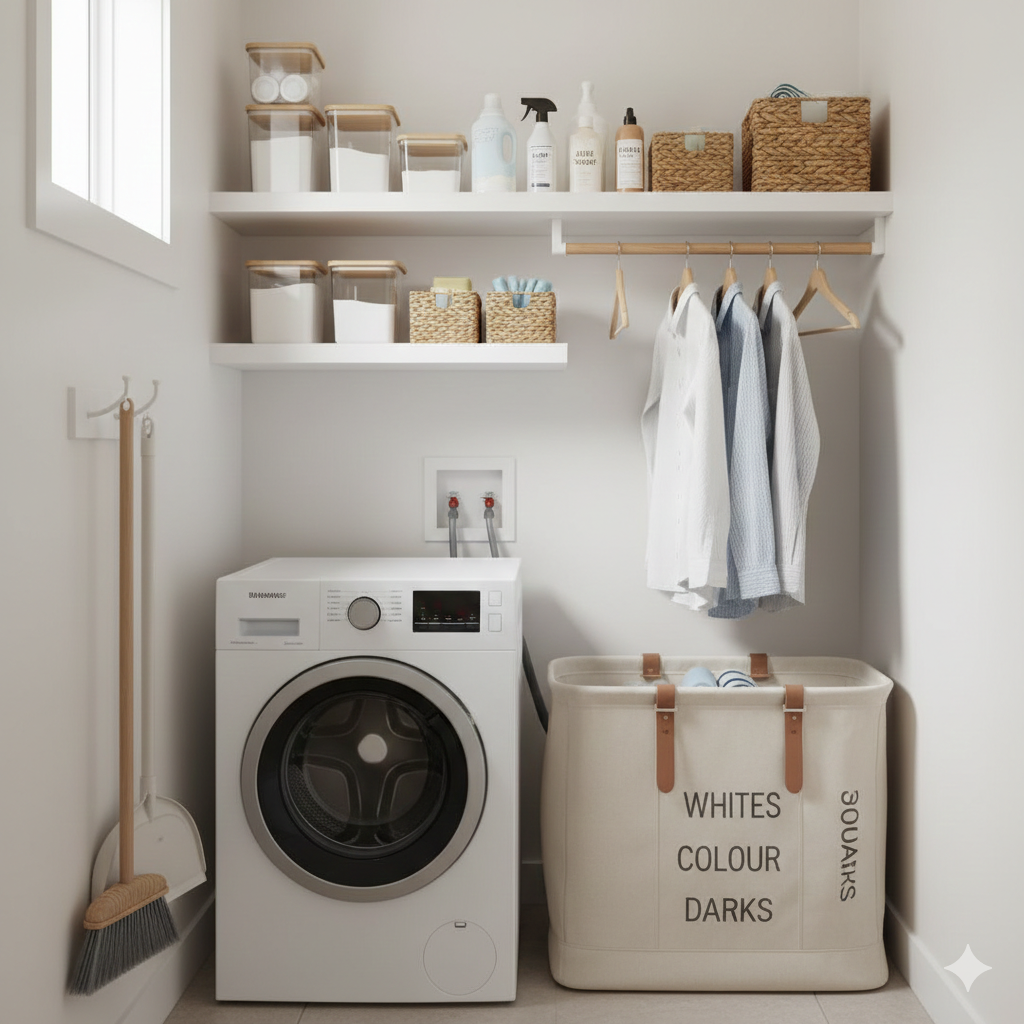
How Do I Organize My Laundry Room Efficiently?
The laundry is one of the most functionally important spaces in homes, yet it’s often the most disorganized. Here’s how to fix that.
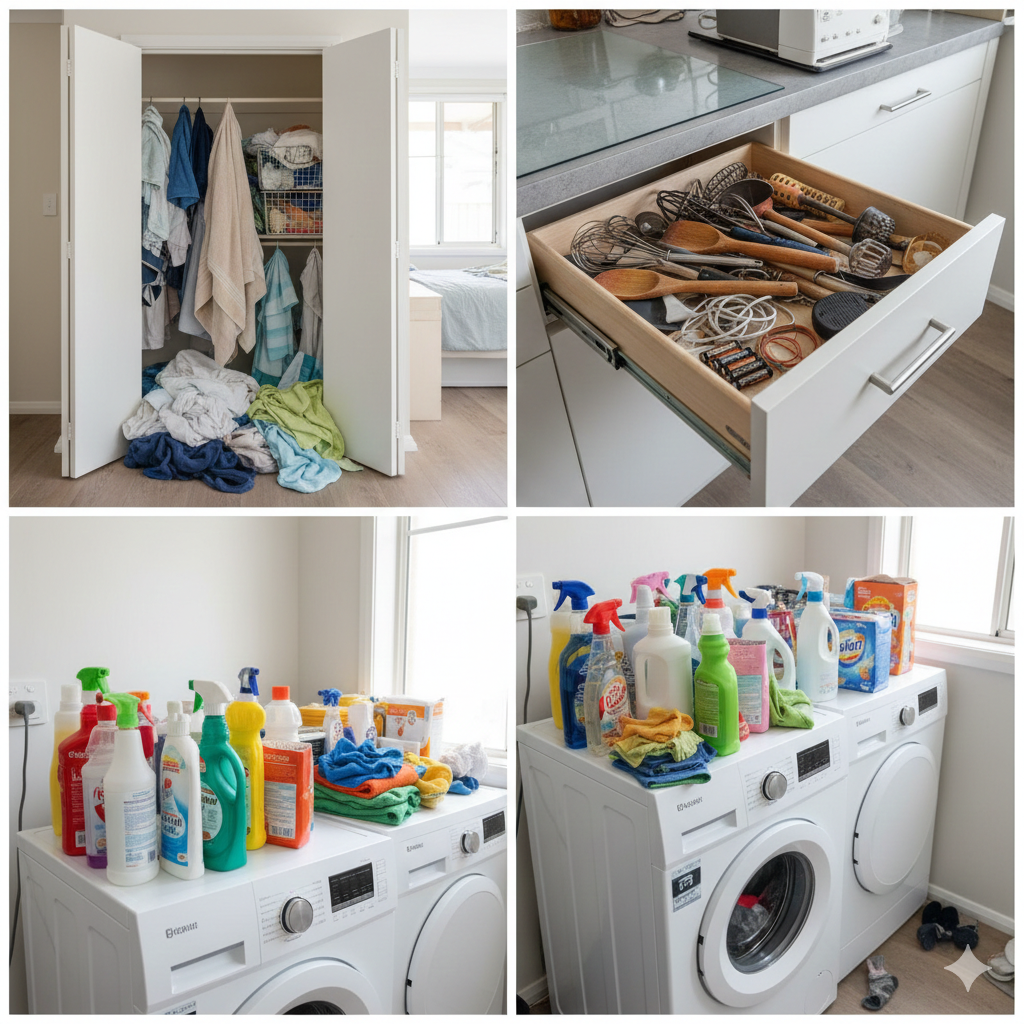
Categorize Cleaning Products
Group your cleaning supplies by function:
- Laundry products (detergent, fabric softener, stain removers)
- General cleaning (all-purpose spray, bathroom cleaner)
- Specialized products (floor cleaner, window cleaner)
Use small bins or baskets to keep each category together. Labels help everyone in the household return items to the right spot.
Install Shelving Above Your Machines
Most laundries have unused wall space above the washer and dryer. Install sturdy shelves for:
- Detergent and cleaning products
- Iron and ironing board
- Laundry baskets
- Extra supplies (light bulbs, batteries)
Use the Inside of Cabinet Doors
Over-the-door organizers or mounted hooks on the inside of laundry cabinet doors can hold:
- Cleaning cloths
- Spray bottles
- Scrub brushes
- Laundry bags
Sort Laundry as You Go
Instead of one massive laundry basket, use a divided hamper with sections for:
- Whites
- Colours
- Delicates
- Towels
This eliminates sorting time on laundry day and makes the process more efficient.
Create a Folding Station
If space allows, designate a countertop or install a fold-down table for folding clothes. Keep it clear of clutter so it’s always ready to use.
How Often Should I Declutter My Home?
Decluttering isn’t a one-time event—it’s an ongoing practice. Here’s a sustainable schedule that prevents clutter from building up again.
Daily: The 10-Minute Evening Reset Before bed, spend 10 minutes returning items to their proper places:
- Clear kitchen counters
- Hang up coats and bags
- Put shoes away
- Return items to their homes
This prevents daily clutter from accumulating into overwhelming piles.
Weekly: Surface Maintenance Once a week, focus on visible surfaces:
- Clear and wipe down kitchen benchtops
- Organize your coffee table
- Tidy your entryway
- Sort through mail and paperwork
Monthly: One-Area Deep Dive Each month, choose one area for deeper decluttering:
- January: Bedroom closet
- February: Kitchen cabinets
- March: Bathroom
- April: Garage or storage areas
- May: Home office or study
- June: Laundry and linen cupboards
- July: Living room
- August: Kids’ rooms and toys
- September: Outdoor areas
- October: Digital decluttering (files, photos, emails)
- November: Pre-Christmas gift and decoration organization
- December: Year-end paper purge
Seasonally: Wardrobe Rotation Australia’s climate varies significantly by region, but most areas experience distinct seasonal changes. Use these transitions to:
- Rotate seasonal clothing
- Donate items you didn’t wear all season
- Assess what you need for the upcoming season
Annually: The Big Review Once a year, take stock of your entire home. Many Australians find the New Year or spring (September/October) ideal for this comprehensive declutter.
What Storage Products Are Worth Buying?
Not all storage products are created equal. Here’s what’s actually worth your money and what you can skip.
Worth the Investment:
Clear Airtight Containers For pantry organization, invest in quality airtight containers. They:
- Keep food fresh longer in Australia’s climate
- Prevent pantry moths and weevils
- Allow you to see inventory at a glance
- Create a cohesive, organized look
Look for brands like Sistema, Decor, or OXO. These typically cost more upfront but last for years.
Drawer Dividers Whether bamboo, acrylic, or plastic, adjustable drawer dividers transform chaotic drawers into organized spaces. They’re particularly valuable for:
- Kitchen utensil drawers
- Bathroom cabinets
- Bedroom dressers
- Office supplies
Under-Bed Storage Boxes Utilize the often-wasted space under beds with low-profile storage boxes. These are perfect for:
- Seasonal clothing
- Extra bedding
- Shoes
- Keepsakes
Choose boxes with wheels for easy access and those made from breathable fabric to prevent moisture issues.
Shelf Risers and Stackable Organizers These multiply your existing shelf space without any installation. They’re affordable (often under $20) and make an immediate difference.
Over-Door Hooks and Organizers Maximize vertical space on the backs of doors throughout your home. These are perfect for small homes and apartments where every centimetre counts.
Skip or Buy Cautiously:
Specialty Single-Use Organizers Be wary of products designed for one very specific purpose (like banana hangers or strawberry containers). They often create more clutter than they solve.
Cheap Plastic Bins Without Lids Low-quality storage bins crack, break, and look messy. If you’re investing in storage, choose sturdy options with lids that stack properly.
Elaborate Closet Systems (Initially) Before spending thousands on a custom closet system, declutter first. You might discover you need far less storage than you think.
Your Simplified Life Starts Now
Decluttering isn’t about achieving some Pinterest-perfect home. It’s about creating a space that supports the life you want to live—a space where you can find what you need, feel calm and focused, and spend your time on what truly matters.
Every item you remove creates not just physical space, but mental and emotional space as well. You’re not just organizing objects; you’re designing a life with less stress, more clarity, and greater freedom.
The journey to a simpler, more organized life doesn’t require perfection. It requires consistency, intention, and self-compassion. Start small, celebrate progress, and remember that every single item you declutter is a choice in favor of the life you deserve.
Take that first 15-minute step today. Your future self will thank you.
Frequently Asked Questions
How long does it take to fully declutter a home?
This depends on your home’s size and clutter level, but using the 15-minute daily method, most people see significant transformation within 3-6 months. A comprehensive whole-home declutter might take 6-12 months done sustainably.
Should I declutter or clean first?
Always declutter first. There’s no point in cleaning and organizing items you’ll eventually discard. Declutter, then clean, then organize what remains.
What if my partner or family doesn’t want to declutter?
Start with your personal spaces and shared areas you control. Lead by example. As they see the benefits, they may become more interested. Never declutter someone else’s belongings without permission.
How do I deal with guilt when getting rid of gifts?
Remember that the gift-giver gave you an item, not an obligation. The joy was in the giving. If the item doesn’t serve you, pass it on to someone who will use it. Take a photo if you want to preserve the memory.
What’s the difference between decluttering and minimalism?
Decluttering is removing what you don’t need or use. Minimalism is a lifestyle philosophy of living with less. You can declutter without being a minimalist—the goal is finding what’s right for you.