You open your wardrobe every morning , and panic. There are more clothes than ever, yet somehow nothing to wear. Sound familiar?
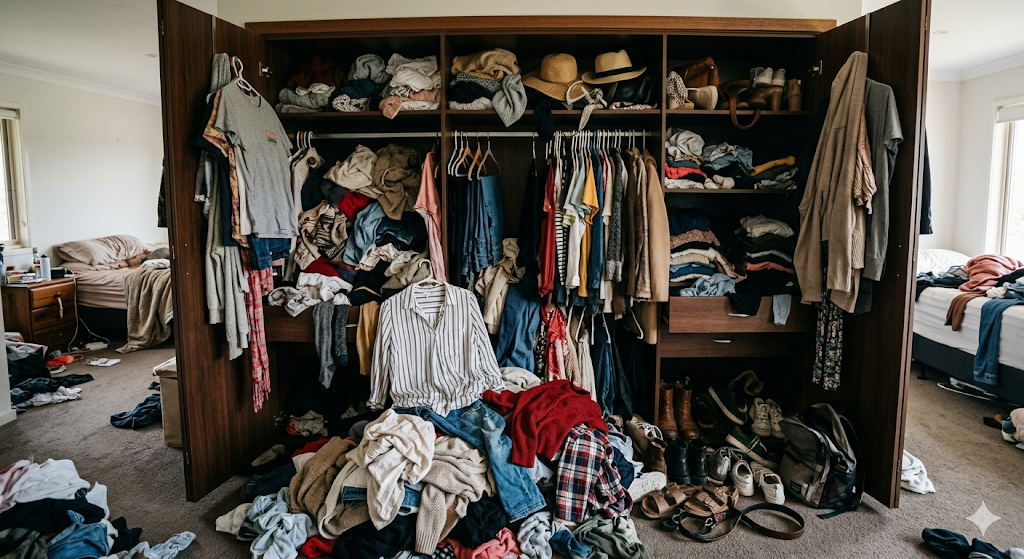
You’re not alone. Studies show the average household has over 100 garments per person, with 20–30% never being worn. A cluttered closet doesn’t just waste space , it wastes time, money, and mental energy every single day.
This guide gives you actionable wardrobe decluttering tips and walks you through exactly how to declutter clothes , whether you’re a first-timer or a recovering hoarder. Let’s make your storage work for you, not against you.
Why Should You Declutter Your Wardrobe?
Before diving into the how-to, it helps to understand what you stand to gain. Decluttering your wardrobe goes far beyond tidiness:
- Save time every morning , a streamlined wardrobe means faster outfit decisions.
- Reduce mental load , fewer choices actually lead to better choices (decision fatigue is real).
- Rediscover forgotten favourites , you’ll find pieces you forgot you owned.
- Make room for storage solutions , once decluttered, smart organisers transform your space.
- Support sustainability , donating or selling clothes extends their life and reduces landfill.
What to Do Before You Start Decluttering Clothes
Jumping in without a plan is one of the most common wardrobe decluttering mistakes. Set yourself up for success with these steps before you pull out a single hanger:
- Block out enough time. A full wardrobe declutter typically takes 2–4 hours. Don’t start on a Tuesday night.
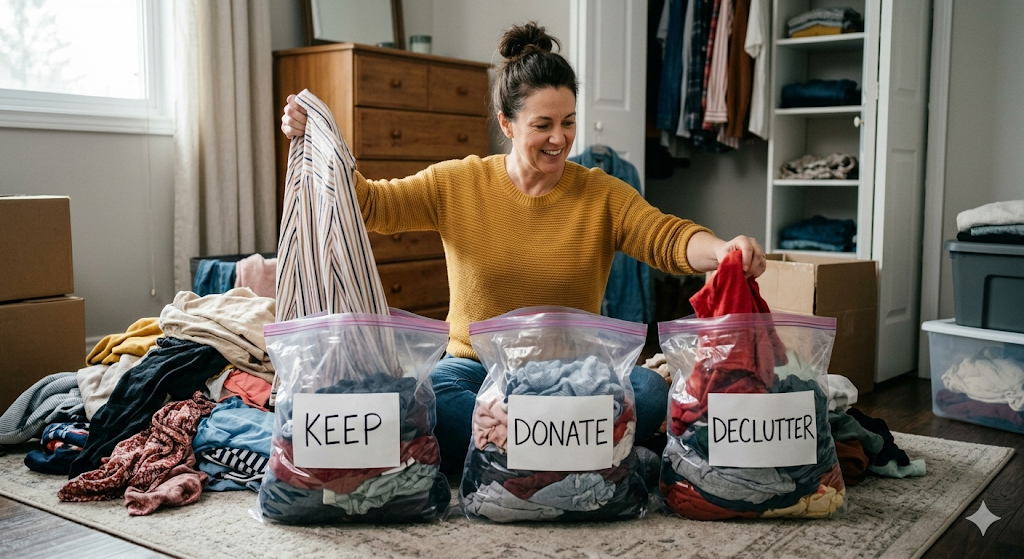
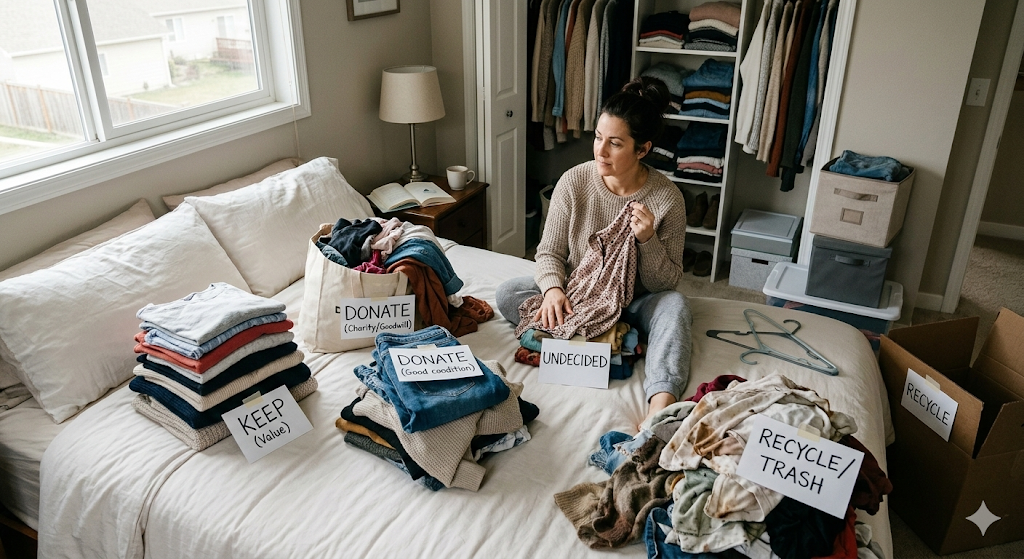
- Grab your supplies. You’ll need bags or boxes labelled Keep, Donate, Sell, and Trash.
- Set the mood. Put on a podcast or playlist , you’ll work faster and feel less overwhelmed.
- Empty everything out. Yes, everything. Pile it on your bed. You need to see the full scope of your closet contents.
How to Declutter Clothes: A Step-by-Step Method That Works
Now for the core process. Here’s a simple, repeatable method for how to declutter clothes that won’t leave you with decision paralysis:
Step 1: The ‘Wear Test’ , does It Earn Its Place?
Pick up each item and ask yourself: Have I worn this in the last 12 months? If the honest answer is no , and there’s no upcoming occasion that genuinely requires it , it goes. Don’t let sentimentality or ‘one day’ thinking win.
Step 2: Fit Check , does It Actually Fit Right Now?
Clothes that are too small, too big, or just uncomfortable shouldn’t take up prime real estate. Keep only items that fit your body today, not the body you’re planning for.
Step 3: The Condition Check , Is It Still in Good Shape?
Pilling, stains, broken zippers, stretched-out elastics , they all signal it’s time to let go. If you wouldn’t buy it in this condition, you won’t wear it either.
Step 4: The Duplicate Audit , do You Need More Than One?
How many black t-shirts or gym leggings do you really need? Narrow down duplicates to two at most , one to wear, one as backup.
Step 5: Sort Into Categories , keep, Donate, Sell, or Trash
Once you’ve evaluated each item, sort decisively. Don’t create a ‘Maybe’ pile , it becomes a ‘keeps growing forever’ pile. If you’re genuinely undecided, put it in a box, seal it, and if you haven’t looked for it in 3 months, donate it unopened.
15+ Expert Wardrobe Decluttering Tips You Need to Know
Beyond the basic process, these tips will help you declutter smarter, faster, and more thoroughly:
- Reverse the hangers. Hang all clothes with hangers facing backwards. After wearing something, return it facing forward. After 6 months, anything still backwards hasn’t been worn , and should go. Personally, I am not the biggest fan of this, it was too much to think what is forward/backward, but in the end it did help me with letting go some pieces of clothes.
- Declutter by category, not location. Pull all tops together, then all pants , don’t work section by section.
- Take photos of sentimental pieces. If you’re holding onto a concert tee for the memory, photograph it and donate the shirt.
- Don’t keep ‘goal clothing’. Clothes you’re keeping for “when I lose weight” are guilt traps. Declutter them and reward yourself with new clothes when the time comes.
- Use the ‘Outsider Test’. Imagine a stylish friend seeing this item in a charity shop. Would they think it was a great find , or pass it by?
- Be ruthless with seasonal clothes. If it didn’t get worn this season, it probably won’t next year either.
- Count your items. Setting a target (e.g., 40 tops maximum) forces honest decisions.
- Give duplicates to friends. It’s easier to let something go when you know who it’s going to.
- Tackle one category per day. Overwhelmed? Split it over a week , tops Monday, bottoms Tuesday, and so on.
- Schedule a donation drop-off immediately. Bags that sit in your hallway for weeks often get unpacked.
- Sell before you donate. List quality items on Facebook Marketplace or Vinted. Give it 2 weeks, then donate what doesn’t sell.
- Store off-season clothes elsewhere. Use vacuum bags to move winter coats out of your main closet during summer.
- Don’t shop to fill the gap. Live with the empty space for a week or two. You’ll see clearly what’s actually missing.
- Involve a second opinion. Ask a brutally honest friend to sit with you , their reaction to each item will tell you everything.
Do a mini-declutter monthly. Spend 15 minutes each month reviewing your wardrobe. Prevention is easier than cure.
How to Organise Your Closet After Decluttering
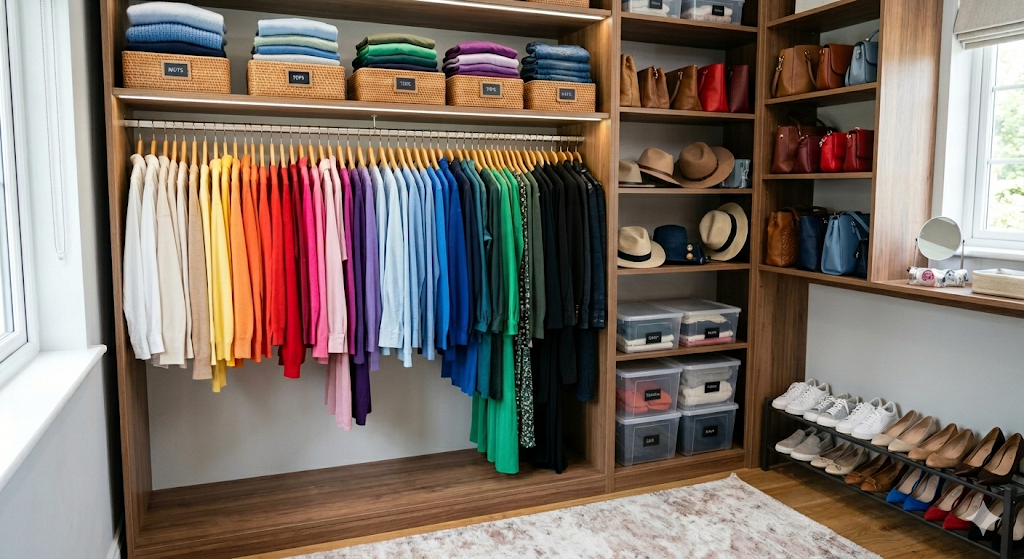
Decluttering is only half the job , organization makes the results last. Once you’ve reduced your wardrobe to items you love, it’s time to optimize the physical closet space.
Maximize Vertical Real Estate
Most people neglect the “dead zones” at the very top and bottom of a standard closet. Use the top shelf for “archival” storage (items used once a year, like ski gear) and consider a double-hanging rod to instantly double your hanging space for shorter items like shirts and skirts.
Let There Be Light
If your closet is dark, you’ll naturally stop maintaining the system because you can’t see what you own. Add motion-sensor LED strips or battery-powered puck lights. Good lighting turns a storage box into a boutique experience.
Group and Colour-Code
Start by grouping clothes by category: tops together, bottoms together, workwear, and casual. Within each category, arrange by colour , it makes finding things dramatically faster.
The Shoe & Accessory System
Shoes are the biggest closet floor clutter culprits. Move them off the floor using over-the-door racks or stackable cubbies. Pro-tip: Store shoes “heels-to-toes” on shelves to save width.
Maintenance & Freshness
Once the closet is empty (Step 4), wipe down the shelves and vacuum the floor. Use cedar blocks or lavender sachets to prevent moths and keep the space smelling fresh.
Recommended Wardrobe Organisation Tools on Amazon
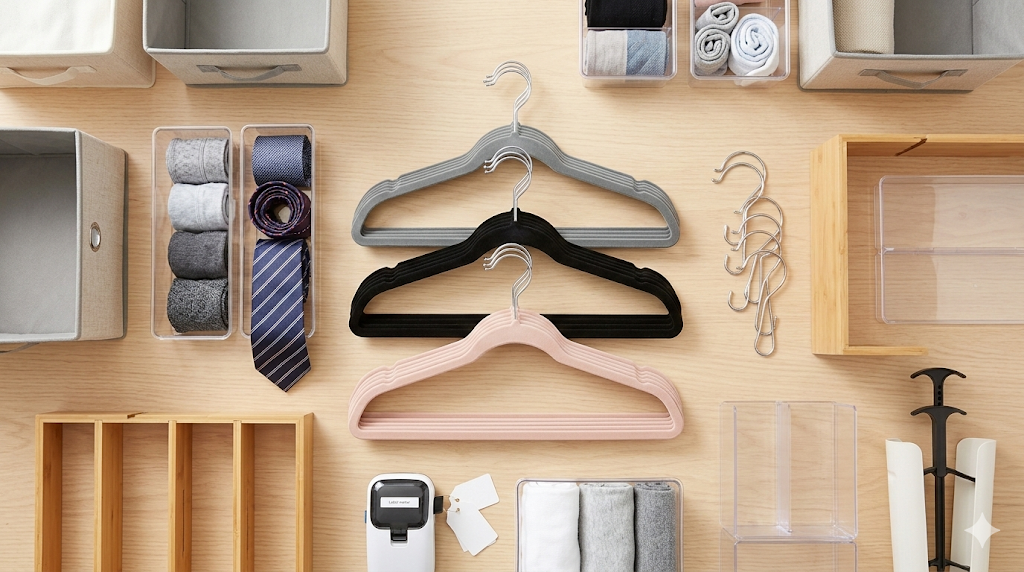
- Slim Velvet Non-Slip Hangers (50-pack) , These free up 30–40% more rail space and provide a clean, uniform look.
- Drawer Organisers / Dividers Set , Perfect for keeping folded items separated by category.
- Hanging Wardrobe Organiser with Shelves , Ideal for shoes or bags in a closet with limited shelving.
- Vacuum Storage Bags , A game-changer for bulky seasonal items.
- Under-Bed Storage Boxes with Lids , Maximize dead space for seasonal clothing.
Common Wardrobe Decluttering Mistakes to Avoid
- Creating a ‘Maybe’ pile. This becomes a permanent resting place for indecision.
- Decluttering and shopping at the same time. Don’t browse online until the declutter is fully done.
- Decluttering someone else’s closet. Focus on your own stuff first.
- Guilt-keeping gifted items. A gift you never use serves no one. Donate it gratefully.
Frequently Asked Questions
How do I declutter clothes I’m emotionally attached to? Photograph the item or write about the memory. You can release the physical object without losing the sentiment.
How many clothes should I keep? There is no magic number, but 30–40 everyday items is a common goal for a “capsule” feel. Aim for a closet where everything fits and flatters.
How do I stop my wardrobe getting cluttered again? Follow the ‘one in, one out’ rule. Every time you buy something new, one older item must leave the closet.
The Bottom Line: A Well-Curated Closet Changes Your Day
Learning how to declutter clothes isn’t about minimalism, it’s about building a space that serves your actual life. When you open your closet and see only things you love, your morning routine becomes a joy rather than a chore.
Start this weekend. Block out a morning, grab your bags, and take back control of your space.
Got questions or want more home organisation tips? Explore more at guru4mess.com , or drop your questions in the comments below!